
For most of the last decade, "private wireless" was a sentence that ended in a project plan. You wanted coverage you owned across a yard or a plant, so you called integrators, they scoped it, and somewhere around month nine you finally had a network. The technology worked. The path to getting it was the problem.
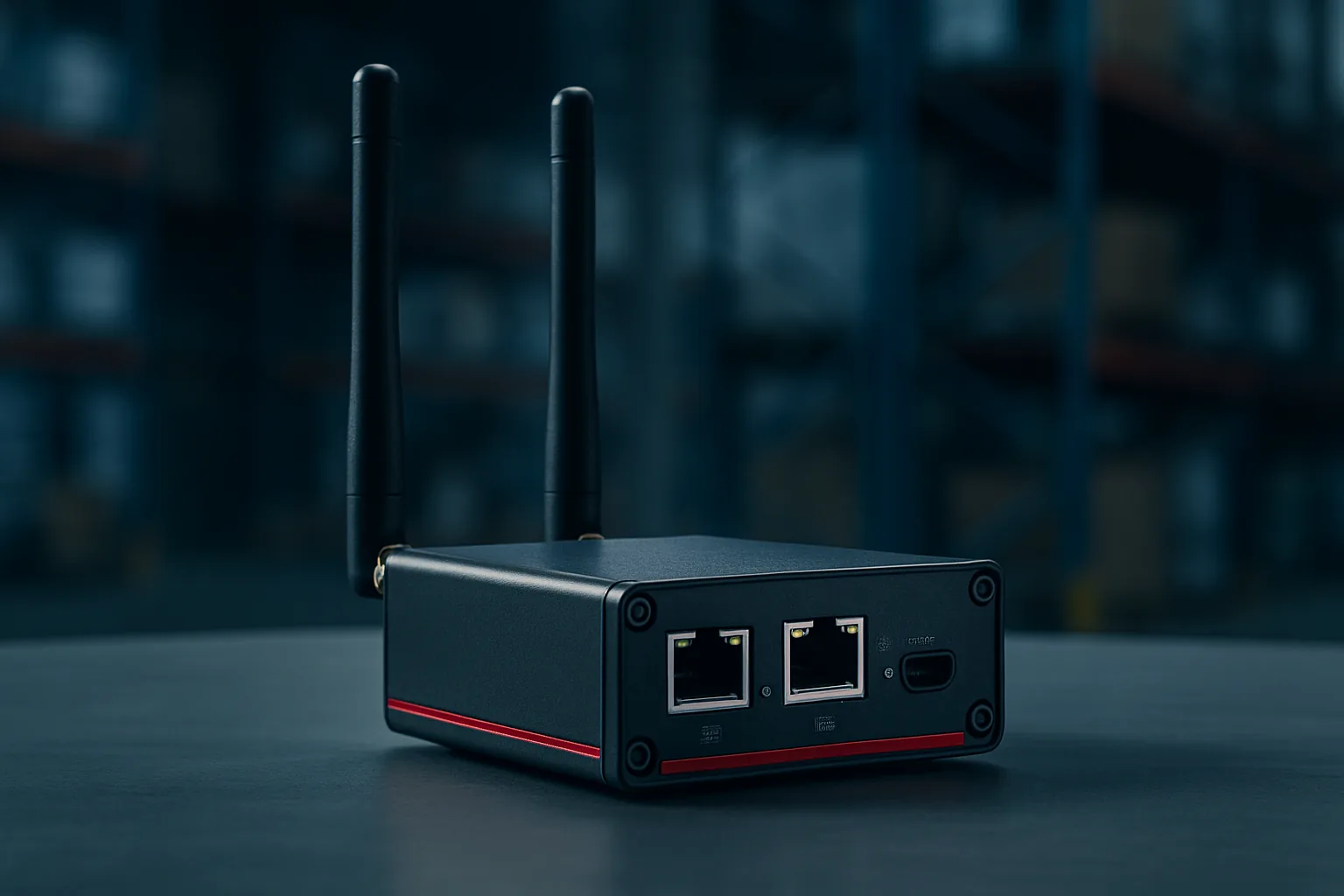
ECHO FLEX exists to remove that path. It's the same private cellular underneath — real private LTE/5G, not a Wi-Fi rebrand — packaged so you can stand it up without the systems-integration marathon. It helps to be honest about both halves of that: what FLEX collapses, and what it deliberately does not pretend to be.
Why the old way took most of a year
Traditional private wireless was slow for reasons that compounded. Spectrum came first — either licensing it or coordinating access, which is its own approval cycle before a single radio ships. Then the core network had to be designed, usually as a one-off, hosted somewhere and wired into your environment by hand. That work was integrator-led by necessity, billed by the hour, and it all landed as a large upfront capital expense. None of those steps were optional, and each one waited on the last.
The result was a real network you owned — and a procurement, design, and deployment effort that only made sense at the largest sites with the longest timelines.
What FLEX bundles to collapse it
FLEX takes the pieces that used to be assembled on-site and ships them as a kit instead:
- CBRS shared spectrum. FLEX runs in the CBRS band, so there's no carrier license to negotiate and no spectrum auction to wait on. The access is shared and coordinated automatically.
- An onboard, managed core. The core network comes with the system rather than being custom-built per deployment. You don't design it; it arrives configured and is managed for you.
- Radios and SIMs as a kit. The hardware ships together. You mount the radios, provision the SIMs into your devices, and the network is yours — no bespoke integration phase between unboxing and coverage.
- Subscription instead of capex. Instead of a single large upfront buy that needs a capital request, FLEX is a subscription. The cost model fits an operations budget, not a multi-quarter approval.
The point isn't that the network got simpler. It's that the assembly moved off your site and into the product.
What FLEX is deliberately not
It's worth being clear, because "easy to deploy" gets oversold. FLEX is not a consumer gadget or a toy — it's licensed-band private cellular that you own and control, segmented from your corporate IT so traffic on it stays on it. It is also not magic. On a very large or radio-hostile footprint, you still want thoughtful coverage planning; a kit removes the integration project, not the physics of where radios go. And it is not a replacement for cellular where you genuinely need a carrier's wide-area reach. FLEX is for the site you operate, where you want coverage that answers to you.
Read that as a feature, not a caveat. The reason FLEX can be deployed without a nine-month engagement is that the hard, repeatable parts — spectrum, core, provisioning — were solved once, in the product, instead of re-solved every time by an integrator.
If your operation has been waiting on a private network because the project always looked too big, that's exactly the gap FLEX was built to close. The ECHO FLEX page walks through what's in the kit and how a Launch Partner deployment actually comes together.